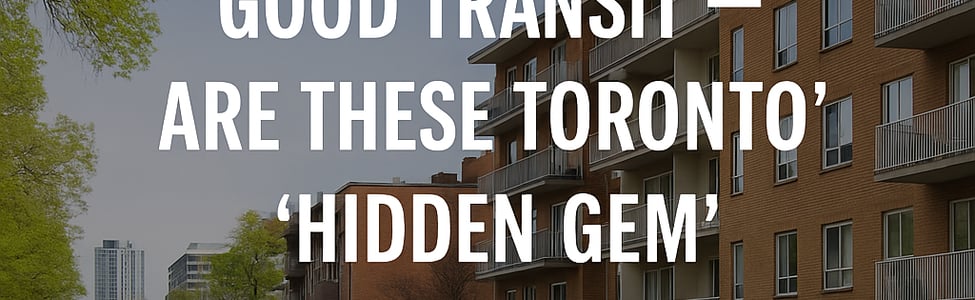


$9.5 Billion of Transit Infrastructure Means One Thing for Investors: Opportunity

For decades, some of Toronto's most successful real estate investments have followed a predictable pattern: buy near major transit improvements before the full impact is reflected in property values.

Today, the Eglinton Crosstown LRT corridor presents one of the most compelling examples of this opportunity.

Stretching across Toronto from Weston Road in the west to Kennedy Station in the east, the Eglinton corridor is benefiting from approximately $9.5 billion in transit infrastructure investment that is reshaping how people live, work, and move throughout the city.

For investors looking to build long-term wealth through real estate, understanding where and how to capitalize on this transformation could make a significant difference in future returns.

As Toronto's market continues to evolve in 2026, strategic investors are focusing less on broad market headlines and more on identifying neighbourhoods positioned for sustained growth.

The Eglinton corridor deserves a closer look.

Why Transit Infrastructure Drives Real Estate Values

Major transit projects do more than improve transportation.

They fundamentally change neighbourhood dynamics.

When residents gain faster, more convenient access to employment centres, shopping, schools, entertainment, and other parts of the city, demand for nearby housing often increases.

Historically, properties located near rapid transit have benefited from:

  • Stronger long-term appreciation

  • Increased rental demand

  • Higher tenant retention

  • Improved walkability scores

  • Greater appeal to both end-users and investors

The Eglinton Crosstown LRT is expected to connect communities across Toronto more efficiently than ever before, creating new opportunities throughout the corridor.

For investors, the key question is no longer whether the corridor will benefit—it is identifying which areas may offer the strongest potential moving forward.

Why This Matters Right Now

The timing is particularly important.

The Bank of Canada's June decision to hold its benchmark interest rate at 2.75% has introduced greater stability into the market.

For investors, this means:

  • Improved financing predictability

  • Greater confidence when evaluating opportunities

  • More accurate cash-flow projections

  • Reduced uncertainty around borrowing costs

At the same time, Toronto's inventory levels have increased by approximately 11.4% year-over-year, creating more selection and negotiating power than investors have enjoyed in recent years.

The combination of stable rates and increased inventory has created a strategic window for buyers who are prepared to act.

Many investors are using this period to secure assets before broader market activity potentially accelerates later in the year.

The Most Interesting Investment Zones Along the Corridor

Weston and Mount Dennis

The western gateway of the Eglinton corridor has attracted increasing investor attention due to major transportation connectivity improvements.

Mount Dennis offers:

  • Access to multiple transit connections

  • Ongoing revitalization initiatives

  • Relative affordability compared to central Toronto neighbourhoods

  • Growing appeal among renters seeking transit access

Investors focused on long-term appreciation often view emerging transit hubs as prime opportunities before broader market recognition occurs.

Keelesdale and Fairbank

These neighbourhoods continue to evolve as transit accessibility improves.

Key investor advantages include:

  • Strong rental demand

  • Diverse housing stock

  • Family-oriented communities

  • Potential for gradual neighbourhood transformation

Many investors appreciate the balance between affordability and growth potential available in these areas.

Oakwood Village and Cedarvale

Located closer to Toronto's core, these neighbourhoods combine established community appeal with enhanced transit connectivity.

Investment characteristics include:

  • Strong end-user demand

  • Desirable urban amenities

  • Limited land supply

  • Consistent long-term appreciation trends

Properties in mature neighbourhoods often benefit from a combination of infrastructure improvements and existing community strength.

Yonge and Eglinton

One of Toronto's most established urban centres continues to attract professionals, renters, and investors alike.

Advantages include:

  • Exceptional transit connectivity

  • High-density residential growth

  • Strong rental demand

  • Significant employment access

While pricing is typically higher, many investors view Yonge and Eglinton as a cornerstone location for long-term portfolio stability.

Leaside and Golden Mile

The eastern portion of the corridor presents unique opportunities as redevelopment activity continues.

Investors are watching:

  • Mixed-use developments

  • Residential intensification projects

  • Employment growth

  • Infrastructure improvements

As these areas evolve, they may experience increased demand from both renters and future homebuyers.

Kennedy Station Area

As the eastern anchor of the corridor, Kennedy Station serves as a critical transportation hub connecting multiple transit systems.

This connectivity creates:

  • Strong commuter appeal

  • Consistent rental demand

  • Potential redevelopment opportunities

  • Long-term growth potential

Transit hubs often become focal points for future investment activity as cities continue to grow.

Why Hyper-Local Analysis Matters

One of the most common mistakes investors make is relying solely on city-wide averages.

The reality is that Toronto is not one market.

It is a collection of micro-markets, each influenced by its own factors.

Even along the Eglinton corridor, investment opportunities vary significantly depending on:

  • Property type

  • Rental demand

  • Development activity

  • School districts

  • Walkability

  • Future infrastructure plans

A condominium near one station may perform differently than a townhouse or duplex located just a few kilometres away.

That's why successful investors focus on hyper-local research rather than broad market assumptions.

The Advantage of Being Pre-Approved

In today's market, preparation remains one of the strongest competitive advantages.

Pre-approved investors can:

  • Act quickly on opportunities

  • Understand acquisition costs accurately

  • Strengthen negotiating positions

  • Evaluate cash flow more effectively

  • Move confidently when attractive properties become available

The best investment opportunities often reward readiness.

What Smart Investors Are Doing Now

Many experienced investors are using the current market environment to:

Review Financing Options

Stable rates allow for more reliable investment planning and cash-flow forecasting.

Identify Transit-Oriented Opportunities

Properties near transit infrastructure often benefit from long-term demand drivers.

Evaluate Rental Market Fundamentals

Strong rental demand remains a critical component of successful investing.

Focus on Long-Term Growth

The strongest returns are often achieved by investors who focus on long-term fundamentals rather than short-term market fluctuations.

Work With Market Specialists

Understanding neighbourhood-level trends can reveal opportunities that broad market data may miss.

The Bottom Line

The Eglinton Crosstown corridor represents one of Toronto's most significant infrastructure transformations in recent history.

Combined with the Bank of Canada's June rate hold and increased housing inventory, investors currently have an opportunity to evaluate properties from Weston to Kennedy under more balanced market conditions.

Success, however, requires more than simply buying near transit.

It requires understanding local neighbourhood dynamics, identifying the right asset type, and building a strategy aligned with your financial goals.

The investors who perform best are often those who combine market knowledge with disciplined decision-making.

Your Next Steps

Every successful real estate investment begins with a clear plan.

Whether you're purchasing your first investment property, expanding your portfolio, or evaluating opportunities along the Eglinton corridor, a personalized strategy can help you make more informed decisions.

Book a strategy session with Team Sapphire to map out a customized roadmap based on your investment goals, budget, risk tolerance, and timeline.

Book Your Complimentary Strategy Session

📞 Call or Text: 416-464-6568

🌐 Website: teamsapphire.ca

🏙️ Serving Toronto and the GTA with precision since 2015

Team Sapphire Realty — helping investors identify opportunities, minimize risk, and build long-term wealth through strategic real estate decisions.

...

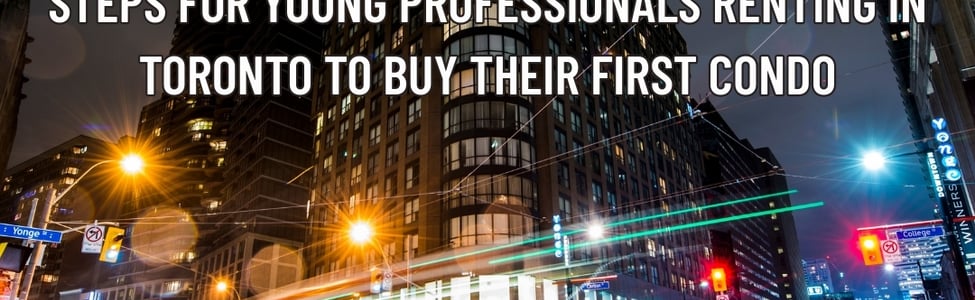
For young professionals renting in Toronto, buying a first condo can feel out of reach. Between rising prices, low inventory, and high rents, many wonder if they’ll ever save enough for a down payment. The good news: with a clear plan, smart savings strategies, and the right resources, buying your first condo in Toronto and the Greater Toronto Area (GTA) is absolutely possible.

This guide walks you through practical steps to go from renter to first-time condo owner in Toronto, Etobicoke, Mississauga, Vaughan, Richmond Hill, Brampton, and nearby cities like Pickering and Newmarket.


Understanding the Current Condo Market in Toronto

Rising Condo Prices Across the GTA

In the Greater Toronto Area, including hubs like Etobicoke, Mississauga, and Vaughan, condo prices have been climbing steadily. Recent data shows average condo prices rising around 8% over the past year in many parts of the region.

What this means for young professionals:

  • Waiting too long can make buying more expensive.
  • The sooner you start planning and saving, the better you can keep up with price growth.
  • Focusing on a realistic price range and area is crucial.

Low Inventory in Popular Neighbourhoods

High-demand areas in the GTA often face low inventory and strong competition:

  • In Richmond Hill and Brampton, condos can sell quickly and sometimes receive multiple offers.
  • Well-located, well-priced units don’t stay on the market long.
  • First-time buyers without a clear budget, savings plan, or mortgage pre-approval may struggle to compete.

To stand out, you’ll need:

  • A solid down payment strategy
  • A pre-approval letter
  • Flexibility on unit size, features, or location

Why Saving for a Down Payment Matters

Saving for a down payment is one of the most important steps to buying your first condo in Toronto.

A larger down payment can help you:

  • Borrow less from the bank, reducing your long-term interest costs.
  • Lower your monthly mortgage payments, making ownership more affordable.
  • Access better mortgage rates, since lenders see you as lower risk.
  • Strengthen your offer in a competitive market, as sellers often prefer buyers with stronger financial positions.

A common benchmark is 20% of the condo price, though Canada allows for lower minimum down payments on many properties. Still, aiming higher gives you more flexibility and reduces the need for mortgage insurance.


Creating a Realistic Savings Plan

Step 1: Track Your Current Expenses

Start by understanding exactly where your money goes each month:

  • Rent and utilities
  • Transportation (public transit, Uber, gas, parking)
  • Groceries and eating out
  • Subscriptions (streaming, apps, gym)
  • Entertainment and shopping
  • Debt payments (credit cards, student loans, car loans)

Use a simple spreadsheet, budgeting app, or your banking app’s insights. Once you see your full spending picture, you can identify areas to cut back and redirect toward your condo savings fund.

Step 2: Set a Clear Savings Goal

Use realistic numbers based on current condo prices in your target area.

Example:

  • Average condo price in your preferred GTA area: $500,000
  • Target down payment (20%):


Your goal: save $100,000 for a 20% down payment.

If prices in emerging areas like Pickering or Newmarket are lower, you can adjust the target. The key is to pick a number and build your plan around it.

Step 3: Break It Into Monthly Targets

Decide when you’d like to buy and work backwards.

Example (5-year plan):

  • Total savings goal: $100,000
  • Timeframe: 5 years = 60 months
  • Monthly savings needed:


If that monthly amount seems too high:

  • Extend your timeline (e.g., 6–7 years instead of 5), or
  • Target a lower-priced condo or area, or
  • Look at ways to significantly reduce expenses or increase income (overtime, side gigs, promotions, bonus savings).

Smart Saving Strategies for Toronto Renters

Open a Dedicated Condo Savings Account

Keep your condo savings completely separate from your everyday spending.

  • Use a high-interest savings account or other low-risk savings vehicles.
  • Nickname the account “First Condo Fund” to keep your goal top-of-mind.
  • Avoid using this account for vacations, big purchases, or emergencies (those should ideally have their own funds).

Reduce Non-Essential Spending

Small cuts can make a big difference over several years:

  • Limit dining out and takeout; cook more at home.
  • Cancel unused subscriptions and memberships.
  • Set a monthly cap for entertainment and shopping.
  • Look for cheaper phone, internet, or insurance plans.
  • Consider a roommate or slightly smaller rental to lower monthly rent and free up extra savings.

Revisit your budget every few months and increase savings whenever your income rises.

Automate Your Savings

Treat your condo savings like a non-negotiable bill:

  • Set up automatic transfers from your main account to your condo savings the day after payday.
  • Automating removes willpower from the equation and makes consistent saving much easier.
  • Increase the transfer amount gradually as your income grows or expenses drop.

Leveraging Government Programs for First-Time Home Buyers

As a first-time buyer in Ontario, you may qualify for several programs that can reduce your upfront costs.

First-Time Home Buyer Incentives

Look into programs such as:

  • Federal First-Time Home Buyer Incentive – offers shared-equity loans to reduce your mortgage payments.
  • RRSP Home Buyers’ Plan (HBP) – lets you withdraw from your RRSP (up to certain limits) for a down payment, if eligible.
  • Ontario land transfer tax rebates for first-time home buyers, which can reduce closing costs.

These incentives can:

  • Lower the amount you need to save in cash.
  • Make your first purchase more manageable.
  • Free up funds for closing costs, furnishings, or renovations.

Always double-check the latest details and eligibility criteria with your lender, REALTOR®, or a mortgage broker, since programs can change.


Preparing for Mortgage Approval

Understand and Improve Your Credit Score

Your credit score plays a major role in:

  • The mortgage rate you’re offered
  • How much you can borrow
  • Whether you’re approved at all

Steps to improve or maintain a strong score:

  • Pay all bills on time, every month.
  • Keep credit card balances low, ideally under 30% of your limit.
  • Avoid opening multiple new credit accounts right before applying.
  • Check your credit report for errors and dispute anything inaccurate.

A higher score can translate into lower interest costs over the life of your mortgage, which is significant.

Get Pre-Approved Before You Shop

A mortgage pre-approval gives you:

  • A clear budget for your condo search
  • An idea of your expected mortgage rate and payments
  • More credibility in the eyes of sellers and real estate agents

In competitive GTA markets like Mississauga, Vaughan, or Etobicoke, pre-approval can help your offer stand out, especially if there are multiple buyers.


Choosing the Right Location in the GTA

Explore Emerging and More Affordable Areas

While central Toronto and hot spots like some parts of Etobicoke or downtown Mississauga can be expensive and competitive, emerging areas may offer better value:

  • Pickering – Good GO train access and growing development.
  • Newmarket – Quieter setting with more space, while still within commuting distance.
  • Parts of Brampton, Richmond Hill, or Vaughan – Certain pockets may offer more reasonable prices than others.

Things to consider:

  • Commute time to work or major transit lines
  • Access to amenities (groceries, gyms, parks, schools)
  • Safety and community feel
  • Condo fees and building management quality

Consider Future Growth and Long-Term Value

Look for areas with:

  • Planned transit expansions
  • New infrastructure projects
  • Upcoming retail, commercial, or residential developments

These can support future price appreciation, turning your first condo not just into a home but also a solid long-term investment.


Additional Tips for First-Time Condo Buyers in Toronto

  • Work with a knowledgeable REALTOR® who understands first-time buyers and GTA condo markets.
  • Compare multiple lenders or use a mortgage broker to find the best rates and terms.
  • Budget for closing costs (legal fees, land transfer tax, inspections, etc.), typically a few percent of the purchase price.
  • Review condo documents (status certificate, reserve fund, rules) carefully to avoid surprises on fees or restrictions.

Final Thoughts: From Renter to Condo Owner in Toronto

For young professionals renting in Toronto, buying a first condo is a big step—but it’s achievable with the right strategy:

  • Understand the current GTA condo market and set realistic expectations.
  • Build a structured savings plan with a clear down payment goal.
  • Use smart saving tactics, automation, and possible government incentives.
  • Strengthen your credit profile and secure a pre-approval.
  • Stay flexible on location, exploring both popular and emerging areas across the GTA.

It may take time, discipline, and trade-offs, but each month of focused saving and planning moves you closer to your goal. Whether you end up in a lively neighbourhood in Etobicoke or a quieter community in Newmarket or Pickering, your first home in the GTA is within reach with a clear plan and consistent action.

...

First-Time Home Buyer Guide in Toronto (2025 Edition)

Key Takeaways

  • Toronto remains competitive, but condos and townhomes are strong entry points for first-time buyers.
  • Government programs like the First-Time Home Buyer Incentive and Land Transfer Tax rebate can reduce costs.
  • Neighborhoods in Scarborough, Mississauga, Brampton, and Vaughan offer more affordable options.
  • Mortgage pre-approval and budgeting for closing costs are essential steps.
  • Working with a trusted realtor helps first-time buyers navigate the complex Toronto housing market.

Introduction

Buying your first home in Toronto is a huge milestone. It’s exciting, but it can also feel overwhelming with rising prices, limited inventory, and a competitive market. In 2025, Toronto’s real estate landscape continues to be one of Canada’s hottest, with condos and townhomes serving as the most realistic entry point for first-time buyers.

This guide will walk you through the essentials: incentives available, budget planning, the buying process, and the best neighborhoods in the GTA for new homeowners.

Understanding the Toronto Housing Market

The Toronto housing market is competitive, but opportunities exist for first-time buyers. Average home prices remain high, but condos and some townhomes continue to offer more affordable entry points.

  • Condos: In downtown Toronto, one-bedroom condos typically start around the mid-$600,000s, while Scarborough and North York may offer slightly lower prices.
  • Townhomes: More common in Mississauga, Brampton, and Vaughan, these homes provide extra space and can start around the mid-$800,000s.
  • Detached Homes: Increasingly difficult for first-time buyers in the city core, but more achievable in outer GTA areas like Milton, Oshawa, or Hamilton.

If you’re curious about current MLS listings Toronto, keep an eye on neighborhoods east and west of the core for better value.

First-Time Buyer Incentives & Programs

Luckily, several programs exist to ease the financial burden of buying your first home:

  • First-Time Home Buyer Incentive: A shared equity program where the government provides 5–10% of your down payment to reduce mortgage costs.
  • First-Time Home Buyers’ Tax Credit: A federal tax credit worth up to $1,500 to help offset closing costs.
  • Land Transfer Tax Rebate: Both Ontario and Toronto offer rebates, saving buyers up to $8,475 (Ontario) plus up to $4,475 (Toronto).
  • RRSP Home Buyers’ Plan (HBP): Withdraw up to $60,000 tax-free from your RRSP to put toward your first down payment.

Setting Your Budget & Mortgage Pre-Approval

Before searching for homes, first-time buyers should determine affordability. A good rule of thumb: your monthly housing costs (mortgage, taxes, insurance) should not exceed 30–35% of your income.

  • Mortgage Pre-Approval: Essential to know what lenders will approve and to strengthen your offer in Toronto’s competitive market.
  • Down Payment: Minimum 5% on homes under $500,000; 10% for the portion between $500,000 and $999,999; 20% for homes above $1M.
  • Closing Costs: Budget at least 3–5% of purchase price for land transfer taxes, legal fees, and inspections.

Choosing the Right Property Type

First-time buyers often start with condos, but the right property depends on your lifestyle and budget:

Best Neighborhoods for First-Time Buyers in Toronto & GTA

Here are some top picks for affordable and accessible first homes:

  • Toronto East: Danforth Village, Scarborough, and East York offer relatively lower condo and townhouse prices.
  • Mississauga: Strong condo market and easy access to Toronto via GO Transit. Explore Mississauga homes for sale.
  • Brampton: Affordable detached and semi-detached homes, perfect for young families.
  • Vaughan: Growing condo and townhome developments near the subway extension.

The Home Buying Process Step-by-Step

  1. Work with a trusted realtor who understands first-time buyers.
  2. Get mortgage pre-approval and set a budget.
  3. View homes online and in person (MLS is your best friend).
  4. Make an offer—include conditions like financing and inspection when possible.
  5. Conduct a home inspection to avoid surprises.
  6. Close the deal—sign paperwork, transfer funds, and get your keys!

Common Mistakes First-Time Buyers Should Avoid

  • Skipping mortgage pre-approval and being surprised by financing limits.
  • Stretching the budget too far and ignoring monthly affordability.
  • Forgetting about closing costs and moving expenses.
  • Buying in a rush without comparing neighborhoods.

Tips for a Smooth Buying Journey

  • Start saving early and consider setting up a First Home Savings Account (FHSA).
  • Stay flexible—your first home may not be your forever home.
  • Use professional advice from mortgage brokers and realtors.
  • Attend open houses to learn market trends firsthand.
  • Download our first-time home buyer guide PDF for a step-by-step checklist.

Conclusion

Buying your first home in Toronto may seem daunting, but with the right plan and support, it’s more achievable than you think. From government incentives to budget-friendly neighborhoods, there are many ways to make the dream of homeownership a reality in 2025.

Whether you’re considering a downtown condo or a family-friendly townhouse in the GTA, Team Sapphire is here to guide you every step of the way.

Frequently Asked Questions

1. How much do I need for a down payment in Toronto?

You need at least 5% of the purchase price for homes under $500,000, with higher minimums for more expensive properties.

2. What is the average price of a condo in Toronto in 2025?

Entry-level condos in downtown Toronto average around $650,000, while Scarborough and North York may offer options in the $500,000s.

3. Are detached homes realistic for first-time buyers in Toronto?

Detached homes in Toronto proper are challenging for first-time buyers, but more affordable options exist in areas like Milton, Oshawa, and Hamilton.

4. What incentives are available for first-time buyers in Ontario?

Programs include the First-Time Home Buyer Incentive, Land Transfer Tax rebates, RRSP Home Buyers’ Plan, and tax credits.

5. Should I buy in Toronto or the surrounding GTA?

If budget is tight, surrounding GTA cities like Brampton, Vaughan, and Mississauga often offer better value while still providing easy access to Toronto.

...

Toronto First-Time Buyer Incentives Explained (2025 Edition)

Key Takeaways

  • First-time buyers in Toronto can save thousands with federal and provincial incentives.
  • Programs include the Home Buyers’ Plan (HBP), First-Time Home Buyer Incentive, and land transfer tax rebates.
  • Toronto has both Ontario and municipal land transfer taxes, making rebates extra valuable.
  • New savings options like the FHSA make down payments more achievable.
  • Combining programs helps maximize affordability for your first home purchase.

Introduction

Buying your first home in Toronto is a major financial step. With average condo prices hovering in the $600,000–$700,000 range, incentives can make a real difference. In 2025, both federal and provincial governments are offering rebates, credits, and programs designed to help first-time buyers step into homeownership.

In this guide, we’ll explain each program, who qualifies, and how much you could save on your first property in Toronto or the GTA.

👉 For the full step-by-step guide, see our Toronto First-Time Home Buyer Guide 2025.

Federal Incentives for First-Time Buyers

The Canadian government offers multiple programs to reduce the upfront costs of buying your first home.

1. First-Time Home Buyer Incentive (FTHBI)

  • The government contributes 5% (resale homes) or 5–10% (new builds) toward your down payment.
  • It’s a shared equity program—you repay when you sell the home or after 25 years.
  • For a $600,000 condo in Toronto, this could mean $30,000 off your mortgage amount. Check out current condos for sale Toronto to see what fits your budget.

2. RRSP Home Buyers’ Plan (HBP)

  • Withdraw up to $60,000 from your RRSP without immediate tax penalties.
  • You have 15 years to repay the amount to your RRSP.
  • Perfect for buyers who have built retirement savings but need cash for a down payment.

3. First-Time Home Buyers’ Tax Credit (HBTC)

  • Tax credit of up to $1,500 for eligible buyers.
  • Claimed when you file your taxes in the year of purchase.

Ontario & Toronto Buyer Rebates

In addition to federal programs, Ontario and the City of Toronto both offer land transfer tax rebates. Since Toronto has two separate land transfer taxes (provincial + municipal), this is a huge savings opportunity.

  • Ontario Rebate: Save up to $4,000 on land transfer tax.
  • Toronto Rebate: Save up to $4,475 on the municipal portion.

Combined, first-time buyers in Toronto can save up to $8,475 in land transfer taxes. That’s money you can put toward moving costs or furnishing your new home. If you’re considering nearby areas like houses for sale in Mississauga, land transfer tax rebates still apply (though only the provincial portion).

First Home Savings Account (FHSA)

Introduced in 2023, the FHSA is a powerful new tool for first-time buyers:

  • Contribute up to $8,000 per year (lifetime max $40,000).
  • Contributions are tax-deductible (like an RRSP).
  • Withdrawals for a qualifying home purchase are tax-free (like a TFSA).

For first-time buyers who are still saving up for a down payment, this account offers the best of both tax worlds.

Can You Combine Incentives?

Yes! Most programs can be combined to maximize affordability. For example:

  • Use the FHSA + HBP to build your down payment.
  • Apply the First-Time Home Buyer Incentive to reduce your mortgage.
  • Claim the HBTC and land transfer tax rebates to lower closing costs.

With the right planning, first-time buyers in Toronto can save tens of thousands of dollars. If you’re exploring more affordable markets, browse a house for sale in Brampton or house for sale in Hamilton where incentives stretch even further.

Who Qualifies for First-Time Buyer Incentives?

General eligibility requirements include:

  • You have not owned a home in the last 4 years (or lived in a spouse’s owned home).
  • You are a Canadian citizen or permanent resident.
  • The property will be your primary residence (not a rental or investment).
  • For the FTHBI, household income must generally be under $120,000–$150,000 depending on region.

How to Apply for Incentives

Applying for incentives usually involves working with your lender and lawyer during the buying process:

  1. Speak with your mortgage broker or bank about using FTHBI and HBP.
  2. Your real estate lawyer will apply the land transfer tax rebates at closing.
  3. Claim the HBTC when you file your taxes for the purchase year.
  4. Open and contribute to an FHSA before your purchase for maximum benefit.

👉 Need help calculating your budget with incentives? Read our free home valuation guide or our upcoming budgeting cluster blog.

Conclusion

Buying your first home in Toronto can feel financially out of reach—but with incentives and rebates, it becomes more achievable. By combining federal, provincial, and municipal programs, first-time buyers can save thousands and reduce the stress of closing costs.

Don’t forget, this is just one part of the journey. For the complete roadmap, check out our Toronto First-Time Home Buyer Guide 2025.

Frequently Asked Questions

1. Can I use both the FHSA and the RRSP Home Buyers’ Plan?

Yes, you can use both together to maximize your down payment savings.

2. How much can I save with land transfer tax rebates in Toronto?

First-time buyers can save up to $8,475 combined from Ontario and Toronto rebates.

3. Do I need to repay the First-Time Home Buyer Incentive?

Yes, since it’s a shared equity program, repayment is required when you sell your home or after 25 years.

4. Can newcomers to Canada qualify for incentives?

Yes, permanent residents and Canadian citizens are eligible, provided they meet other requirements.

5. What’s the best incentive for saving up for a down payment?

The FHSA is the strongest tool for saving tax-efficiently before your purchase.

...

Toronto’s real estate market has always been dynamic, and in 2025 it continues to shift with changing interest rates, evolving buyer demand, and significant differences between housing types and neighborhoods. Choosing the “best” place to buy really depends on what you are looking for—affordability, long-term growth, lifestyle, or investment stability. Let’s break down what’s happening in the market right now and highlight the areas that stand out for different types of buyers.


The Market Snapshot in 2025

As of early 2025, the average home price across the Greater Toronto Area sits around $1.09 million. Detached homes, semi-detached, and townhouses are holding their value better than condominiums, which are seeing softer demand and in some cases slight price declines. Condo oversupply is a real factor, giving buyers more negotiating power in that segment.

Inventory is also much higher than a year ago—active listings have risen by nearly 80 to 90 percent compared to 2024 in some months. This means buyers now have more choice and less competition than during the frenzied years of bidding wars. Sales, however, are down by about 20 to 30 percent, showing that buyers are more cautious, often waiting for more stability in interest rates or better affordability conditions. Overall, price growth has slowed, with luxury detached homes holding their premium while mid-range condos remain under pressure.


What “Best Place” Really Means

The best place to buy depends heavily on your priorities. For first-time buyers, affordability and access to transit may matter most. Families often focus on school districts and safety. Investors may prioritize areas with growth potential, new transit lines, or rental demand. Lifestyle-driven buyers might choose walkable, urban neighborhoods with vibrant culture and amenities. Toronto offers different answers depending on which of these categories you fall into.


Emerging Value Neighborhoods

Several neighborhoods within the city are drawing attention in 2025 for their balance of price and potential. Keelesdale, Caledonia-Fairbank, Briar Hill, and Oakwood Village stand out as “hidden gems.” Homes in these areas are generally more affordable than in midtown or the downtown core, with many detached houses available for under or around the million-dollar mark. These neighborhoods are also benefiting from ongoing transit expansion projects, such as the Eglinton Crosstown LRT, which will make commuting easier and boost long-term appreciation.

While these areas may lack the prestige of Rosedale or Forest Hill, they offer real opportunities for first-time buyers and investors looking for growth. Buyers should be mindful that some properties may need renovation, and infrastructure or school options can be more limited than in more established districts.


Scarborough and East Toronto

For buyers looking for more space without paying central Toronto prices, Scarborough and parts of East Toronto provide good value. Detached and semi-detached homes here remain more affordable than in the west end or midtown. With new transit projects underway, connectivity to the rest of the city is improving, making these neighborhoods more attractive. The trade-off can be longer commutes, depending on where you work, but families often find the larger homes and access to parks worthwhile.


North York and Family-Friendly Areas

North York continues to attract buyers who want strong infrastructure, access to schools, and a mix of housing options. While prices are higher than in Scarborough, they remain more reasonable than downtown for the space you get. Family-oriented neighborhoods like Leaside and The Beaches in the east end are also popular thanks to their excellent schools, parks, and community feel, though they come with a significant price premium.


Suburban Options

For those who prioritize affordability and space, moving just outside Toronto can make sense. Cities like Mississauga, Vaughan, Brampton, Ajax, and Oshawa offer newer builds and larger homes for less than what you would pay within Toronto proper. These areas continue to grow as more buyers are pushed outward by Toronto’s high prices. Commuting times can be longer, but transit expansion projects are slowly improving access. The resale market in new subdivisions can be more volatile, so it’s important to research carefully, but for young families or first-time buyers, the suburbs remain a practical choice.


Luxury and Established Neighborhoods

On the other end of the spectrum, Toronto’s luxury neighborhoods such as Forest Hill, Rosedale, Yorkville, and The Beaches remain highly desirable. These areas are known for their prestige, stability, and strong demand from high-net-worth buyers. Prices are steep, often well above the city average, but they carry less risk of price declines compared to more speculative areas. If your goal is long-term security and quality of life rather than dramatic appreciation, these neighborhoods are among the safest bets.


Risks to Keep in Mind

Despite opportunities, buyers should remain cautious. The condo market is facing oversupply, which could keep prices soft in the near term. Mortgage qualification rules and interest rates, though slightly more favorable than in recent years, are still high enough to challenge affordability. Promised transit projects may take longer than expected, which can delay appreciation in certain “up-and-coming” areas. Finally, changes in government policies or taxes can alter the investment landscape.


Conclusion: Where Should You Buy?

If you are a first-time buyer on a budget, emerging neighborhoods like Keelesdale, Caledonia-Fairbank, and Scarborough offer a solid entry point. Families with a focus on schools and safety may find North York, Leaside, or The Beaches more appealing, provided they can handle the higher prices. Investors seeking appreciation might focus on areas near new transit lines or in the suburbs, where population growth continues to drive demand. Luxury buyers, meanwhile, will find long-term stability in established neighborhoods like Forest Hill and Rosedale.

In 2025, the best place to buy a property in Toronto depends not on one universal answer, but on aligning your goals with the right neighborhood. With higher inventory and less competition than in previous years, buyers have more room to explore and negotiate, making this a promising time to find a home that fits both your lifestyle and your financial strategy.

...

Toronto is a city full of surprises. While many headlines highlight million-dollar detached homes and competitive bidding wars, there are still pockets in the city offering incredible value — especially for first-time buyers, young families, and savvy investors. These underrated communities combine affordability, great public transit access, and promising long-term potential, earning them the title of Toronto’s “hidden gem” neighbourhoods.

Let’s dive into what makes these areas so appealing — and why now might be the perfect time to make a move.


1. Scarborough Village

Nestled near the lake with access to GO Transit and TTC routes, Scarborough Village offers spacious homes at a lower cost compared to downtown. The area is undergoing revitalization, and its mix of condos, townhomes, and detached homes make it perfect for growing families and investors.

Why it’s a gem:

  • TTC & Eglinton Crosstown access

  • Proximity to Bluffer’s Park & Guildwood GO

  • Larger lots and lower price-per-square-foot


2. Mount Dennis

With the upcoming Eglinton Crosstown LRT, Mount Dennis is quickly gaining attention. Historically overlooked, it’s now on the radar for its affordability and transit upgrades.

Why it’s a gem:

  • Future transit hub

  • Access to parks, trails, and schools

  • Excellent ROI potential for investors


3. East York (Crescent Town & Woodbine-Lumsden)

Tucked between the Beaches and the Danforth, East York blends community charm with urban convenience. You’ll find a mix of bungalows and semi-detached homes ideal for renovation or rental.

Why it’s a gem:

  • Quick subway access (Woodbine, Main St.)

  • Family-friendly with schools and green space

  • Below-average Toronto home prices


4. Weston

Another area transformed by the UP Express and Crosstown expansion, Weston has become a commuter’s dream with downtown in reach within 15 minutes.

Why it’s a gem:

  • Direct UP Express to Union Station

  • Development projects adding value

  • Vibrant local community and amenities


5. Rexdale-Kipling

Often overlooked due to its industrial history, Rexdale is becoming a hotspot for young families and first-time buyers. With community investment and new developments, it’s a budget-friendly way to enter the market.

Why it’s a gem:

  • Larger homes, lower prices

  • TTC, GO access, and Hwy 401 proximity

  • Close to Humber College and green space


Why These Areas Matter in 2025

Toronto’s core will always be a premium market, but today’s smart buyers are looking beyond the obvious. With mortgage rates stabilizing, many of these neighbourhoods present a once-in-a-decade opportunity to buy low and benefit from long-term growth.

As transit expands and infrastructure improves, these “hidden gems” won’t stay hidden for long.


Want to See These Gems for Yourself?

Whether you’re a first-time buyer, an investor, or looking for a smart move-up opportunity, these neighbourhoods deserve your attention.

📞 Call Mahesh Khatri at +1 (416) 464-6568
🌐 Visit www.teamsapphire.ca

👉 Want to book a showing or receive handpicked gem listings in your inbox? Register now and don’t miss your chance to own in one of Toronto’s most promising neighbourhoods!

...
1
2
3